

Ver el proyecto de elaboración de materiales curriculares completo. Aprobado por la Consejería de Educación. Junta de Andalucía
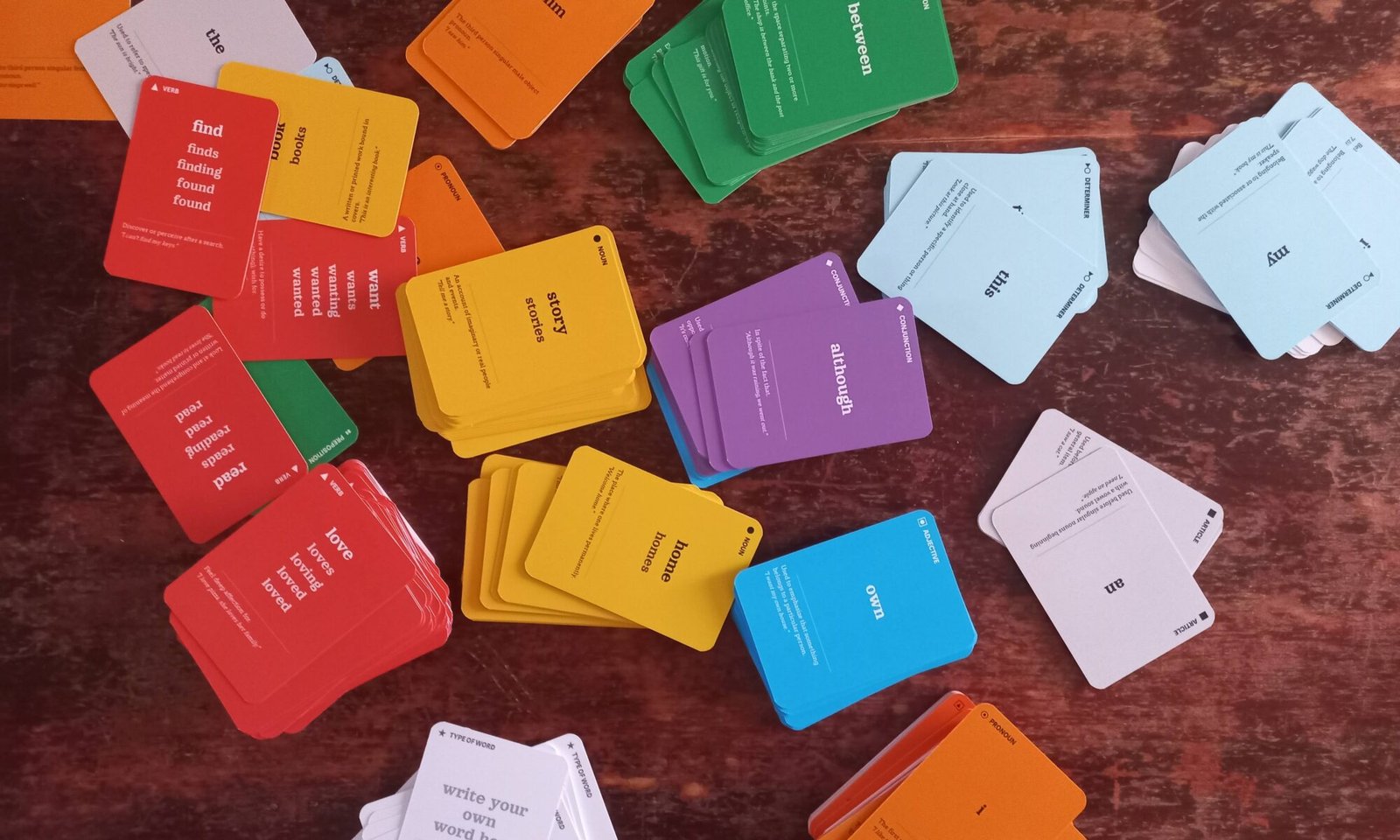
This Research Through Design study presents wor(l)ds, a physical card game aimed at helping young learners grasp English word classes and syntactic relations. Conceived as both a pedagogical tool and an epistemic artifact, the game embodies six empirically derived design principles: Visual-Semantic Coding, Multi-Sensory Engagement, Contextual Scaffolding, Paradigmatic-Syntagmatic Visualization, Social Construction Facilitation, and Kinesthetic Accessibility. The research demonstrates how abstract linguistic concepts can be made intuitive through visual coding, embodied interaction, and game-based scaffolding. Additionally, the study contributes methodologically by integrating AI into both game development and academic writing, positioning educational design as a rich domain for scholarly inquiry.
Keywords
artificial intelligence, research through design, language, reflective practice, instructional design
Introduction
Designing educational tools that effectively translate abstract linguistic concepts into tangible learning experiences presents a complex and multifaceted challenge. This research investigates how principles of interaction design and material-based pedagogy can be applied to support young learners’ understanding of English word classes and their syntactic relations. Rather than approaching grammar instruction as a purely pedagogical problem, this study frames it as a design problem—one that demands innovative strategies for representing linguistic structures through physical interaction, visual coding, and collaborative play.
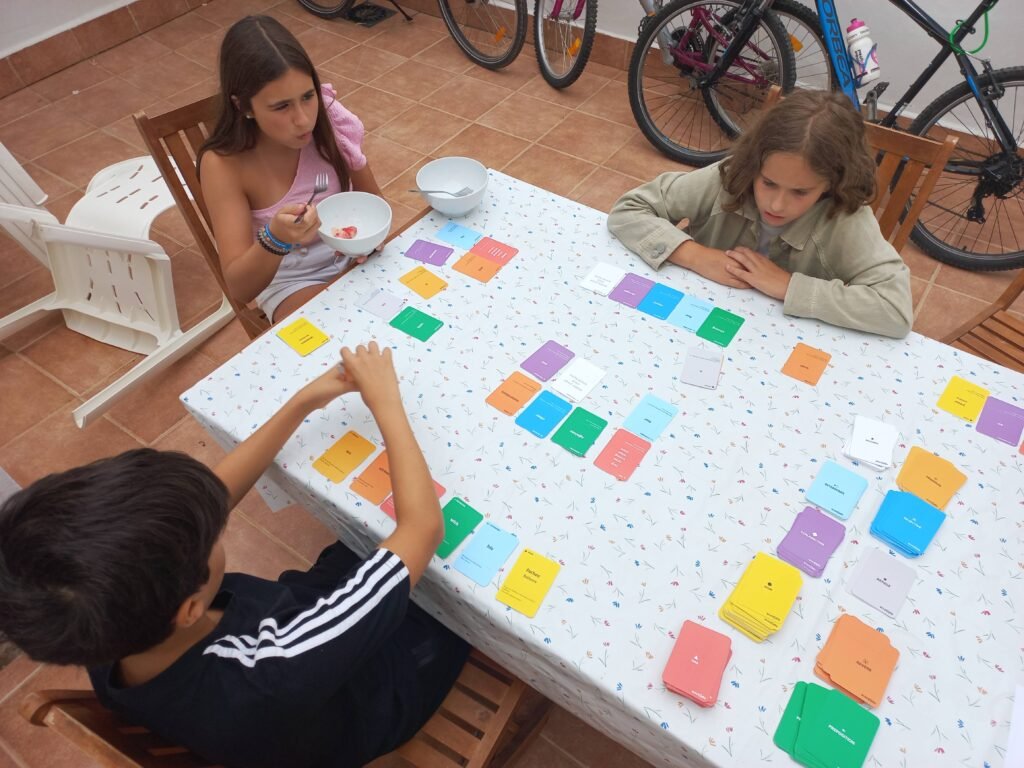
The project centers on the development of wor(l)ds, a physical card game designed through iterative Research Through Design (RtD) cycles. The game embodies a set of empirically derived design principles—Visual-Semantic Coding, Multi-Sensory Engagement, Contextual Scaffolding, Paradigmatic-Syntagmatic Visualization, and Social Construction Facilitation—that emerged through the process of designing, testing, and refining the game mechanics and materials. These principles are not merely pedagogical heuristics but constitute a contribution to design knowledge: they articulate how tangible artifacts can be structured to support abstract reasoning, how game dynamics can scaffold conceptual exploration, and how collaborative interaction can facilitate metalinguistic reflection.
By treating grammar learning as a site for design inquiry, this research advances our understanding of how educational games can be designed to make abstract knowledge accessible, engaging, and functionally meaningful. The study contributes to the broader discourse on instructional design by demonstrating how physical materials, visual systems, and social play can be orchestrated to support cognitive and linguistic development. In doing so, it positions the wor(l)ds game not only as a pedagogical tool but as a designed artifact that embodies theoretical insights into the nature of learning, representation, and interaction.